Crewman
July 31, 2025

What kind of applications do you think companies are building with the power of AI and how do you think you can test them?

  • July 31, 2025
  • 39 replies
  • 862 views

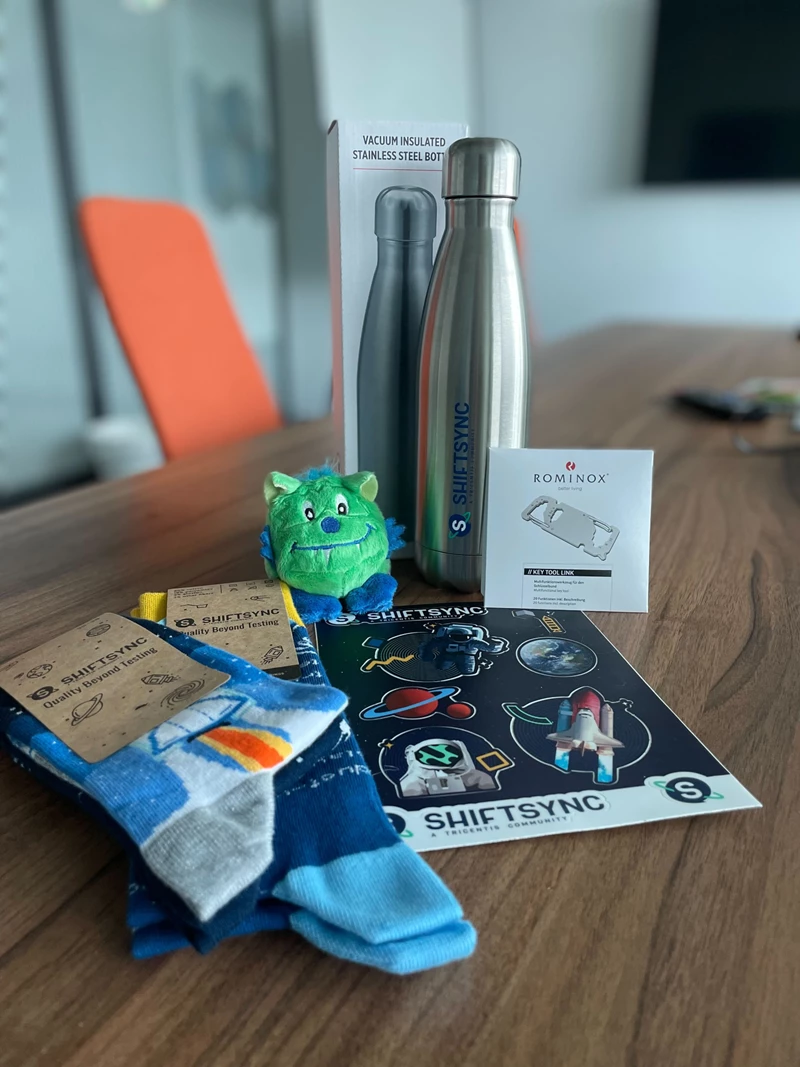
Answer Karthik KK’s Question for a chance to win a ShiftSync Giftbox


39 replies

Apprentice
July 31, 2025

Applications companies build with AI:

  1. Chatbots & Virtual Assistants – for customer support (like ChatGPT).

  2. Recommendation Systems – for shopping, movies, etc. (like Netflix or Amazon).

  3. Fraud Detection – in banking and finance.

  4. Predictive Maintenance – for machines and equipment.

  5. Image & Speech Recognition – in healthcare, security, and phones.

  6. Autonomous Vehicles – like self-driving cars.

  7. Personalized Marketing – targeted ads and emails.

How to test them:

  1. Unit Testing – test small pieces of code.

  2. Data Validation – check input data quality.

  3. Model Accuracy Testing – see how well AI predictions match reality.

  4. Performance Testing – test speed and scalability.

  5. A/B Testing – compare two versions to see which performs better.

  6. Bias & Fairness Testing – ensure results are not unfair or biased.

  7. User Testing – get feedback from real users.

Ensign
July 31, 2025

Companies are building:

  • Chatbots & virtual assistants
  • Predictive analytics tools
  • Image/document recognition apps
  • Recommendation engines
  • AI-powered test automation

How do we test AI?

  • Data Testing – Ensure clean, balanced, and unbiased training data
  • Model Output Testing – Check for accuracy, edge cases & consistency
  • Fairness Testing – Audit for biased or discriminatory outcomes
  • Explainability – Validate if decisions are transparent & justifiable
  • Model Regression Testing – Detect performance drift after updates
  • E2E Testing – Validate how AI fits into full user workflows
  • Performance Testing – Test AI latency, load handling, and reliability
  • Adversarial Testing – Test how AI handles manipulated or malicious inputs


Ensign
July 31, 2025

Testing Ethical Boundaries and Social Biases

AI systems often unintentionally reflect the biases in their training data. Think facial recognition systems performing poorly on darker skin tones or chatbots giving offensive responses.

Out-of-the-box test cases:

  • Enter job titles like “doctor” and “nurse” with different gender indicators. Does the system show biased language or assumptions?

  • Test content moderation AI with sarcasm, emojis, or code-switched text.

  • Create “red teaming” scenarios where you try to trick the AI into violating its own ethical guardrails.

Persona Testing

AI applications like chatbots or recommendation systems can respond differently based on user context or profile.

Test idea:

  • Simulate multiple personas: a 20-year-old gamer, a 50-year-old finance exec, a non-native English speaker.

  • See how the app’s behaviour changes: language, recommendations, or visual elements.

Mutation Testing on Input Data

You “mutate” the input data slightly to see if the AI model changes its decision drastically — a sign of instability or poor generalization.

Example:

  • Modify one word in a sentence: "I am happy today" → "I am very happy today"

  • For image models, slightly blur or crop the image

  • For speech models, simulate background noise

Data Drift & Model Drift Simulations

Over time, AI models become outdated as data changes (e.g., new slang, product names, or seasonal data). This is called drift.

Out-of-the-box testing:

  • Feed the model recent vs. old data and observe output differences.

  • Check if accuracy drops when given data from new regions, markets, or age groups.

Ensign
July 31, 2025

Answer Karthik KK’s Question for a chance to win a ShiftSync Giftbox



Companies are using AI for things like:

  • Smart Chatbots/Virtual Assistants: For customer service, like website support or voice assistants.

  • Content Creation: Generating text (articles, emails) or even code.

  • Personalized Recommendations: Suggesting products (Amazon), movies (Netflix), or music (Spotify).

  • Fraud Detection: Spotting unusual financial transactions.

  • Computer Vision: Facial recognition, object detection for self-driving cars or quality control.

  • Predictive Maintenance: Forecasting when machines might break down.

Testing AI apps is tricky because they're not always predictable. You need to:

  • Test the Data: Ensure the data used for training is high quality, unbiased, and covers many scenarios.

  • Test the Model: Check if the AI gives accurate, consistent results, even with slightly wrong inputs (robustness).

  • Test for Bias: Make sure the AI doesn't produce unfair or discriminatory outcomes.

  • Test Explainability: See if you can understand why the AI made a certain decision.

  • Continuous Monitoring: Keep an eye on AI performance in the real world, as it can "drift" over time.

Ensign
July 31, 2025

As a lead, I’ve had the opportunity to work with several clients, and one clear trend I’ve noticed is that our entire industry is steadily leaning towards AI. Most companies are now building applications that can think, learn, and adapt—ranging from personalised assistants and AI-powered chatbots to Blockchain AI development and Auto-healing or AI powered Test Automation.

Like Karthik mentioned during the webinar, it's crucial that our fundamentals are solid before starting with the AI testing. It’s no longer just about checking if a button works. We need to evaluate how well the AI learns, adapts, and makes decisions.

That includes validating the input data of LLMs, verifying the predictions, and verifying how the model behaves in different scenarios. AI might work well 95% of the time, but it’s that remaining 5% that can have the biggest impact.

Exactly, the 5% matters and needs human intervention, while the 95% needs human validation

Space Cadet
July 31, 2025

Companies are building AI-powered apps like chat bots, recommendation systems, predictive analytics, autonomous vehicles, and medical diagnostics.

Test with real-world data, edge cases, performance metrics, user feedback, and ethical audits to ensure accuracy and reliability.

Ensign
July 31, 2025

Companies are building AI apps like emotion-aware chatbots, predictive engines, and adaptive supply chains.

Testing involves handling unpredictable behavior through real-time data and edge cases.

Key focus areas: bias detection, explainability, and ethical responses.

Goal: Ensure AI is not just intelligent, but also fair, safe, and reliable.

Note: AI testing isn’t about confirming performance—it's about discovering the unknown. The goal is to ensure AI behaves like a wise apprentice: smart, reliable, accountable—and always learning from its mistakes.

Ensign
July 31, 2025

Answer Karthik KK’s Question for a chance to win a ShiftSync Giftbox


At my company, we're building crop monitoring and seed recommendation systems that help farmers make data-driven decisions about crop selection and field management.

How I test our crop monitoring and seed recommendation systems:

Domain Understanding: I collaborate with our agricultural team and partner farmers to understand soil science, weather patterns, and regional growing conditions, which guides my testing approach.

Automated Testing: We use Tricentis Testim to automate key user flows - farmer onboarding, data input validation, recommendation generation, and dashboard interactions. This ensures our core workflows remain stable as we iterate on our AI models.

AI-Specific Testing: I validate our recommendation engine with historical crop data, test various soil and weather scenarios, and ensure our system handles missing sensor data gracefully.

Real-World Validation: We partner with pilot farms to test recommendations in actual growing conditions, tracking performance against traditional farming methods over complete seasons.

Continuous Monitoring: I monitor recommendation accuracy, farmer adoption rates, and actual crop yield outcomes in production to ensure our AI genuinely improves farming results.

Safety Testing: I ensure our system never recommends crops that could fail catastrophically or damage soil health, with proper fallbacks when data is incomplete.

Success is measured not just by technical accuracy, but by whether we're actually helping farmers improve their harvests and livelihoods

Dhrumil812
Ensign
July 31, 2025

Picture this: You order coffee through an app, and AI predicts your usual order before you even think about it. Netflix knows you'll binge-watch that new series before you do. Your bank flags suspicious transactions faster than you can say "fraud". These aren't science fiction anymore—they're Monday morning reality.

Companies are going all-in on conversational AI (those chatbots that actually understand you), recommendation engines that feel like mind-readers, and automated decision systems that process loans, resumes, and insurance claims while you sleep.
 

Traditional testing is like "input A, expect output B." But AI? It's more like "input A, get output B, C, or maybe something completely unexpected that's still somehow correct."

Smart Testing Strategies:

  • Behavioral testing instead of exact matching—does the chatbot stay helpful even when users get creative with their questions?
  • Bias hunting—making sure your AI doesn't accidentally become prejudiced
  • Load testing with a twist—AI models can be computationally hungry beasts
  • Good old UI testing—Playwright still rocks for testing how users interact with AI features

The Bottom Line

Testing AI applications is like being a detective, data scientist, and quality guardian all rolled into one. You're not just checking if it works—you're ensuring it works fairly, consistently, and doesn't go rogue at 3 AM.

Dhrumil
Apprentice
July 31, 2025

AI apps companies are building:
     Generative AI Applications
     Predictive Analytics
     Computer Vision Applications
     Natural Language Processing (NLP)
     AI in Automation and RPA

How to Test AI Applications:
     Data Testing
     Model Testing
     Functional Testing
     Self-healing and Resilience Testing
