

PolinaKr
Community Manager
March 17, 2026

Challenge: What are the three biggest challenges for quality in the AI era?

  • March 17, 2026
  • 37 replies
  • 495 views

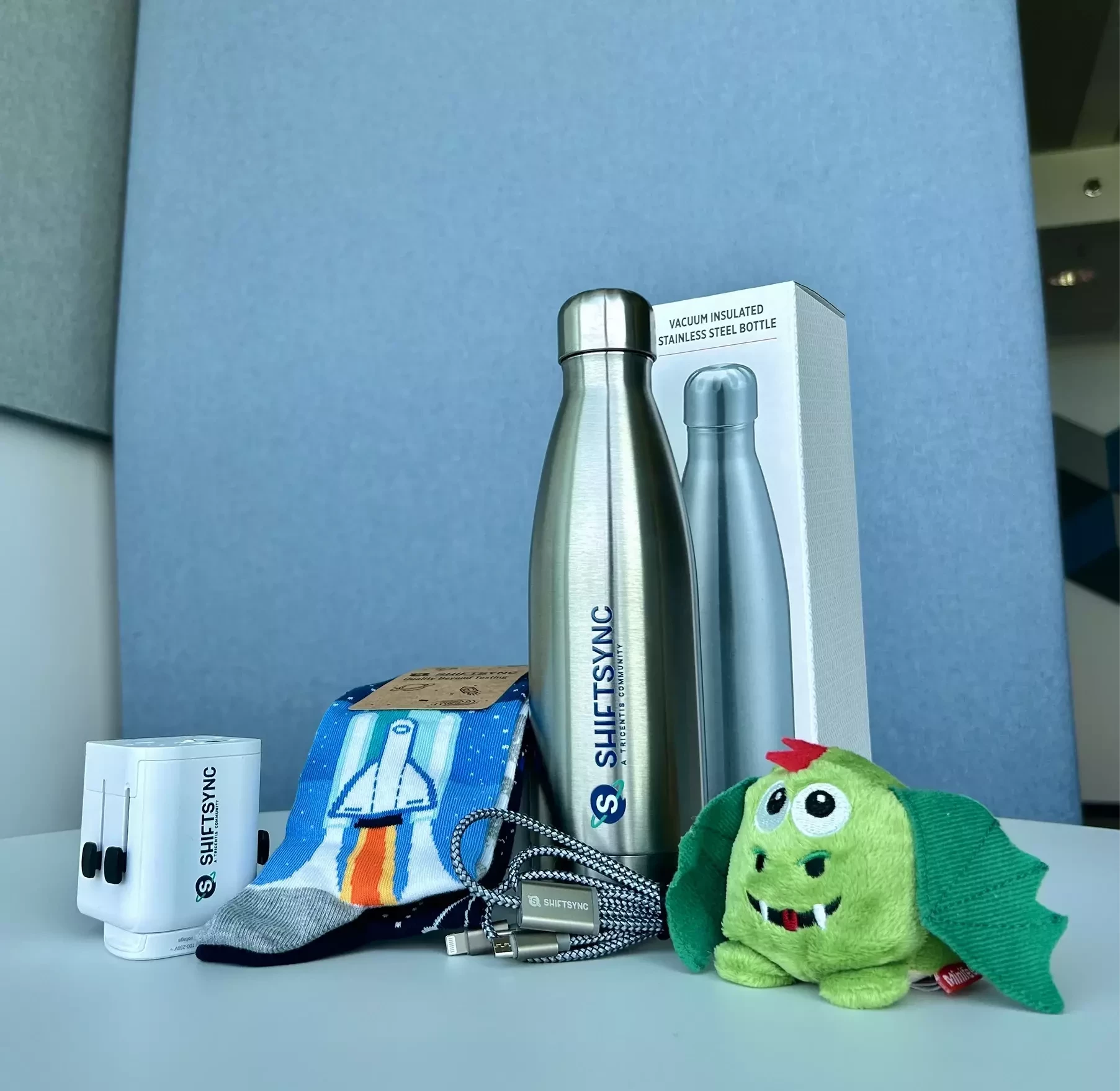
Take on Filip’s challenge for a chance to win! The lucky winner will walk away with a gift box from us!🎁
What are the three biggest challenges for quality in the AI era?

Drop your answers in the comments below. 

37 replies

Apprentice
March 17, 2026

Three Biggest Quality Challenges in the AI Era
 

1. Unpredictable Outputs
AI can give different answers for the same input, making testing and debugging difficult.

2. Hard to Measure Quality
There’s no single “correct” answer—quality depends on accuracy, relevance, and context.

3. Trust & Safety Issues
AI can be wrong, biased, or unsafe, so ensuring reliable and ethical behavior is a big challenge.

Ensign
March 17, 2026

1) Data Quality & Bias 

  • incomplete data leads to unreliable outputs

  • Biased datasets amplify unfair or discriminatory results

  • Outdated data produces irrelevant or incorrect insights

2) Consistency & Reliability at Scale

  • Same prompt slightly different outputs

  • Edge cases can produce errors or hallucinations

  • Performance may degrade over time

3) Explainability

  • AI's black-box nature makes it hard to understand decision-making processes, eroding trust and complicating quality assurance.
Ensign
March 17, 2026

3 biggest Quality Challenges in AI Era

1. AI hallucination and drifts

It gets frustrating at times to get the model respond to the prompts and get the expected answer.

2. Training for Quality Engineers on Context Engineers

Proper training needed to Quality Engineers on good practices on prompting and building skills.

Absence of this, can bloat context,  increase token usage and increase costs 

3. Response is nondeterministic . I find it difficult to telling a prompt is accurate, what is the precision,what metrics can be used to assessa prompt.


Ensign
March 17, 2026
  1. How precisely we are able to write the rules in .md files?
  2. If agent makes a mistake, we need to fix the rules wherever applicable and find time to train the agent.
  3. Need to prioritize tests based on risks (business, customer impact, quality/privacy standards etc)
Space Cadet
March 17, 2026

The three biggest challenges for quality in the AI era are ensuring fairness and eliminating bias, maintaining transparency and explainability, and safeguarding compliance and ethical standards. These issues directly affect trust, adoption, and the long-term sustainability of AI systems.

Ensign
March 17, 2026

1. Ad hoc business requirements 
2. AI Product testing
3. Matching the pace with tech evolving 

Space Cadet
March 17, 2026

How to deal with Velocity?

How to deal with Quality?

How do LLMs work?


Space Cadet
March 17, 2026

The three most pressing challenges for quality in the AI era are ensuring fairness by eliminating bias, maintaining transparency through explainability, and safeguarding compliance with ethical standards. Together, these issues shape trust, influence adoption, and determine the long-term sustainability of AI systems.

Apprentice
March 17, 2026

Three challenges I see

  1. Inconsistent Outputs AI models can generate different results even when given the same input, making reliability and repeatability difficult.

  2. Quality of Training Data The accuracy of AI predictions depends heavily on the data it was trained on. If the data is incomplete or incorrect, the model can produce flawed outcomes.

  3. Limited Understanding of Business Context AI often struggles to fully grasp complex business logic, regulatory requirements, and nuanced user experience expectations, which can lead to solutions that miss critical real‑world constraints.

deepakbehera
Astronaut
March 17, 2026

In the AI era, software testing is shifting from simply validating deterministic features to actively engineering trust in unpredictable systems. Based on current industry insights, here are the three biggest challenges:
1. Non-Determinism
Unlike traditional software, AI systems are probabilistic and complex. The same input can produce different outputs across runs, making traditional "expected vs. actual" assertion testing highly ineffective. Additionally, the "black box" nature of AI models means there is often a lack of transparency in how decisions are made, which makes root cause analysis and debugging incredibly complex. Quality teams are forced to shift toward intent-based validation and define acceptable response boundaries instead of looking for exact matches.
2. Data Integrity and Drift
AI models devour tremendous amounts of data, and their output is only as good as the information they ingest. Ensuring training data is clean, unbiased, and properly labeled is a massive hurdle. Even if a model is highly accurate at launch, real-world data distributions shift over time, causing the model's performance to degrade silently. This requires a complete paradigm shift from one-time release testing to continuous quality monitoring and evaluating datasets as first-class test artifacts.
3. Trust and Governance
As AI accelerates code and software creation, organizations face the friction of trusting outputs that may be "nearly right" but are not necessarily production-ready. AI often fails convincingly through believable hallucinations, which can create a false sense of security and amplify flakiness in unstable systems. The ultimate challenge is establishing clear accountability, mitigating security risks, and orchestrating risk-based validation at scale so enterprises can move at the speed of AI without compromising compliance.

Deepak Behera