

PolinaKr
Community Manager
March 17, 2026

Challenge: What are the three biggest challenges for quality in the AI era?

  • March 17, 2026
  • 37 replies
  • 495 views

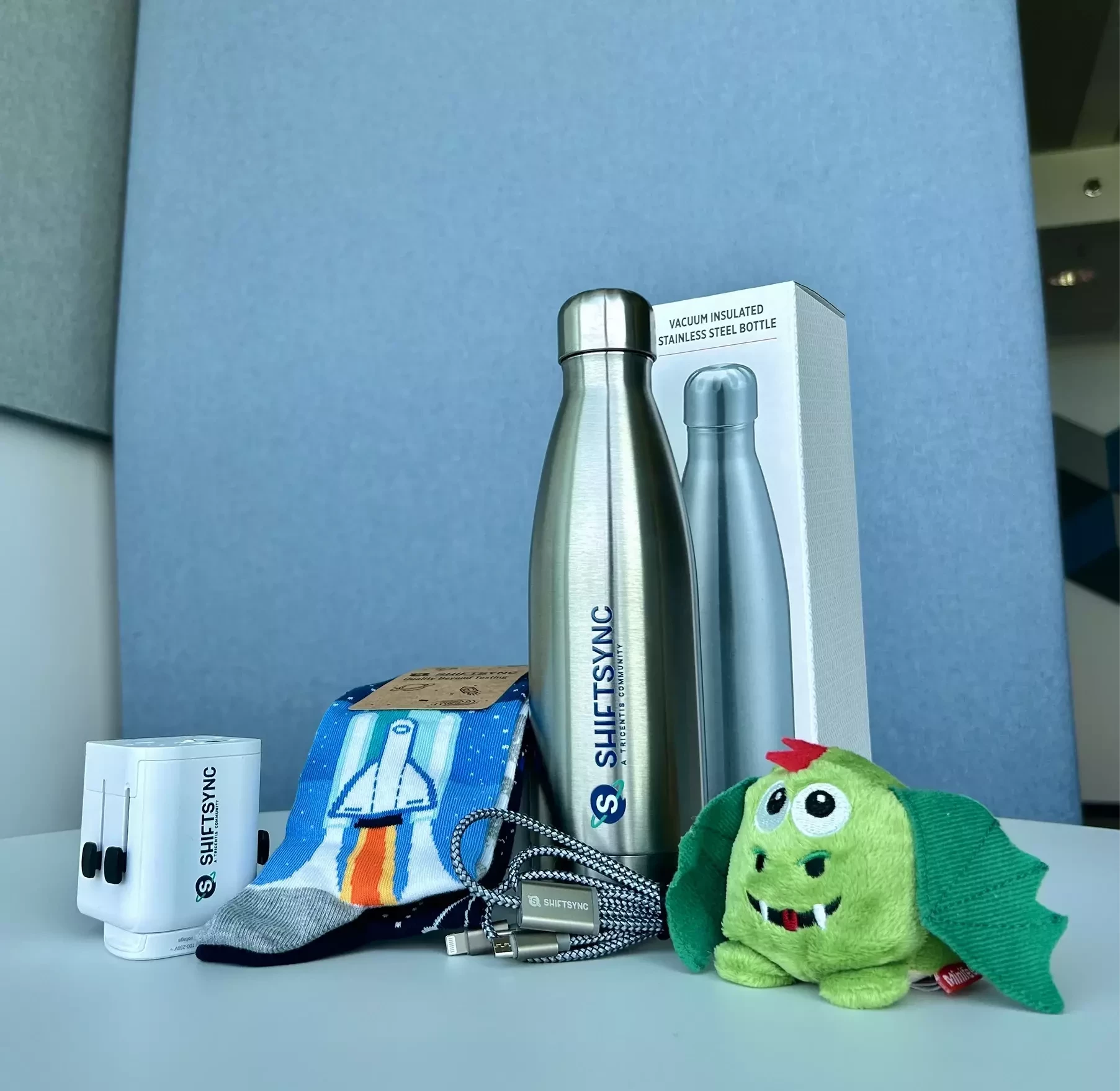
Take on Filip’s challenge for a chance to win! The lucky winner will walk away with a gift box from us!🎁
What are the three biggest challenges for quality in the AI era?

Drop your answers in the comments below. 

37 replies

Space Cadet
March 17, 2026
  1. Non-determinism — AI outputs vary across runs, making traditional assertion-based testing brittle. "Correct" is often subjective or probabilistic, requiring statistical validation and LLM-as-judge approaches.

  2. Observability & explainability — When a model produces a wrong answer, tracing why is hard. There's no stack trace for a bad inference, making root cause analysis and regression prevention fundamentally different from classical software.

  3. Data & prompt drift — Models degrade silently as real-world data distributions shift or prompts change. Continuous quality monitoring (evals, golden datasets, shadow testing) must replace one-time release testing.

Space Cadet
March 17, 2026

Agentic AI usage in Quality

March 17, 2026
  1. Understanding and trusting AI outputs, 2. ensuring high‑quality data as the foundation for quality, and 3. maintaining continuous validation as models evolve - all of which are significantly more complex than traditional deterministic software quality checks.
Ensign
March 17, 2026
  • Effective usage of AI in reducing automation test maintenance
  • Use of agents in e2e test scenarios automation covering (UI, API and Backend CLI)
  • AI workflows for e2e test cycle, starting from test case generation from PRDs to automating test cases to execution, to find root cause of failures and logging defect
Ensign
March 17, 2026


1.Data Quality & Bias

AI systems are only as good as the data they learn from.


Why it’s a challenge:


  • Incomplete, noisy, or outdated data → poor predictions
  • Hidden bias in training data → unfair or discriminatory outcomes
  • Data drift over time → models become less accurate


Example:

A hiring AI trained on historical data may unintentionally favor certain profiles if past hiring was biased.


2.Explainability & Transparency (Black Box Problem)


Many AI models (especially deep learning) don’t clearly explain why they made a decision.


Why it’s a challenge:


  • Hard to debug failures
  • Difficult to gain user trust
  • Regulatory pressure (especially in finance, healthcare)


3.

Dynamic Behavior & Continuous Learning


Unlike traditional software, AI systems evolve over time.


Why it’s a challenge:


  • Models can change with new data (retraining)
  • Same input may produce different outputs over time
  • Hard to define “expected results” (no fixed oracle)


Example:

A recommendation engine today may behave differently next week after retraining.


vbank
Ensign
March 17, 2026
  1. Data Quality & Bias - AI systems are only as good as the data they’re trained on. Poor, incomplete, or biased datasets lead to unreliable outputs.!--endfragment>!--startfragment>
  2. Transparency & Explainability - Many AI models (especially deep learning) are “black boxes.” It’s difficult to explain why a model made a certain decision.!--endfragment>!--startfragment>
  3. Governance, Ethics & Security - AI introduces new risks—ethical misuse, regulatory non-compliance, and adversarial attacks.!--endfragment>!--startfragment>
Space Cadet
March 17, 2026

1️⃣ AI systems built on Machine Learning aren’t fully predictable, so testing shifts from checking exact results to evaluating reliability and behavior patterns.
2️⃣ Data quality and model drift can silently reduce performance over time, making continuous monitoring essential.
3️⃣ Systems powered by Generative AI introduce new risks around trust, safety, and explainability that QA must actively manage.

Dhrumil812
Ensign
March 17, 2026

The three biggest challenges for quality in the AI era are:


1. Believable mistakes AI doesn’t fail loudly – it fails convincingly. It can give answers that sound right but aren’t, making it harder to detect issues and easier to trust the wrong output.

2. Constantly changing behavior Unlike traditional systems, AI isn’t stable. Small changes in data, prompts, or models can shift results, so quality isn’t a one-time check – it's something that needs continuous monitoring.

3. Blurred accountability When AI goes wrong, it’s unclear who’s responsible – the model, the data, or the developer. This makes ensuring fairness, reliability, and trust much more complex.


Quality in AI is no longer just about correctness—it’s about trust, adaptability, and responsibility.

Dhrumil
Ensign
March 17, 2026
  1. Data Quality - AI models depend heavily on data. Ensuring clean, balanced, and well labeled data is a major challenge
  2.  Black Box problem - Many AI Models, especially deep learning, are difficult to interpret. This makes it hard to understand decisions, debug, issues, and build user trust
  3.  Testing complexity - Quality now includes privacy and safety. AI systems avoid this
  4. Security Risks -AI systems are vulnerable to adversarial attacks, data and misuse
  5. Scalability and performance - It require high computational resources and must perform efficiently at scale.
  6. Quality in the AI era is continuous, multi dimensional process that goes beyond testing. It requires managing data, monitoring models
Ensign
March 17, 2026
  1. Hallucinations and Accuracy: AI models often generate information that is factually incorrect, nonsensical, or completely fabricated, making rigorous verification essential.

  2. Bias and Fairness: Models can inherit and amplify biases present in their training data, leading to unfair or discriminatory outcomes that must be actively identified and mitigated.

  3. Lack of Explainability (The "Black Box"): The decision making process of complex AI is often opaque, making it difficult to understand why an error occurred or to trust the output in high stakes scenarios.