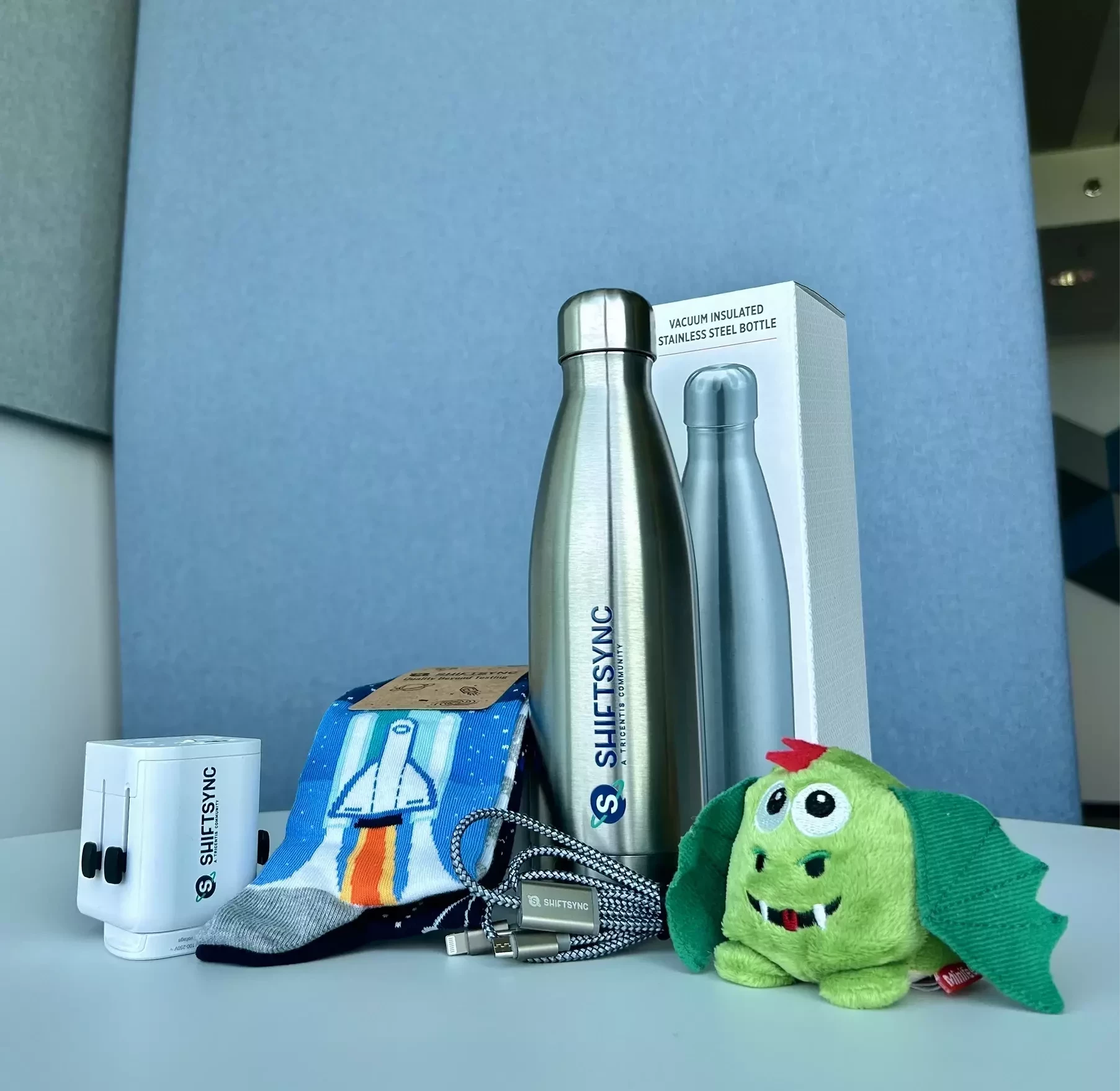
Solve the challenge by Shyam Singh and get a chance to win our gift box 🎁
How can you use AI workspace to refine the requirement with Product owner and then create well defined test cases.
Good day @Mustafa ,
Here is my response below,
From an Ambiguous Requirement to Testable Scenarios Using AI Workspace
I would use AI Workspace as a collaboration assistant between the Product Owner and QA—not simply as a test-case generator.
Example: E-commerce Discount Code
Initial requirement:
“Users should be able to apply a discount code during checkout.”
This requirement is not fully testable because the business rules, restrictions and expected error behaviour are unclear.
1. Analyse the Requirement
I would enter the requirement into AI Workspace with the following prompt:
“Analyse this requirement and identify ambiguities, missing business rules, boundary conditions, negative scenarios and clarification questions for the Product Owner. Do not generate test cases until the requirement is confirmed.”
AI Workspace could identify questions such as:
Can multiple discount codes be applied?
Is there a minimum order value?
Is the code case-sensitive?
Can expired or inactive codes be entered?
Can the same customer reuse the code?
Are any products excluded?
Can the discount exceed the order value?
What message should appear when a code is rejected?
2. Refine It with the Product Owner
During the refinement discussion, the Product Owner confirms:
Only one discount code can be applied per order.
The minimum order value is ₹1,000.
Codes are case-insensitive.
Expired, inactive and already-used codes must be rejected.
Restricted products are excluded.
The discount cannot exceed the eligible order value.
The customer must receive a clear validation message.
I would enter these decisions back into AI Workspace and ask it to rewrite the requirement as measurable acceptance criteria.
3. Create Testable Acceptance Criteria
Example:
Given the customer has eligible products worth ₹1,000 or more in the cart And the discount code is valid and active When the customer applies the code Then the correct discount must be applied to the eligible products And the updated order total must be displayed.
The Product Owner reviews and approves the refined requirement before test-case generation begins.
4. Generate Well-Defined Test Cases
I would prompt AI Workspace:
“Generate positive, negative, boundary and business-rule test cases strictly from the approved acceptance criteria. Include Test Case ID, preconditions, test data, steps, expected result, priority and acceptance-criteria mapping.”
ID
Scenario
Expected Result
TC-01
Apply a valid code to an eligible order
Correct discount is applied
TC-02
Enter the valid code using lowercase letters
Code is accepted because it is case-insensitive
TC-03
Apply the code to an order below ₹1,000
Code is rejected with a clear minimum-value message
TC-04
Apply an expired or inactive code
Code is rejected with the appropriate message
TC-05
Attempt to apply two discount codes
Only one discount code is permitted
TC-06
Apply the code to eligible and restricted products
Discount is applied only to eligible products
TC-07
Reuse a single-use code
Code is rejected without changing the total
TC-08
Apply a discount greater than the eligible total
The payable amount does not become negative
5. Apply Human Review
Finally, I would use AI Workspace to:
Check that every acceptance criterion has test coverage.
Identify missing, duplicate or contradictory scenarios.
Highlight any test case based on an unapproved assumption.
Map each test case to its acceptance criterion.
Suggest suitable regression and automation candidates.
The Product Owner remains responsible for the business intent, while the QA engineer validates coverage, test data, risk and feasibility.
Workflow:
Raw requirement → AI gap analysis → PO clarification → Approved acceptance criteria → Test-case generation → Traceability → Human review
AI Workspace does not replace the Product Owner or QA engineer. It helps them ask better questions, remove ambiguity earlier and create complete, traceable and high-quality test cases.
The best use of AI in testing is not generating more test cases it is ensuring that we are testing the right requirement.
Thanks,
Ramanan
Hunt the bugs, ensure the hugs. Quality is everything.
I use AI Workspace as a requirement-refinement and test-design assistant. First, I provide the raw requirement and ask AI to identify ambiguities, missing business rules, edge cases, and questions for the Product Owner. After discussing and clarifying those points with the PO, I update the requirement with the agreed acceptance criteria. Then I use AI to derive positive, negative, boundary, and security scenarios and generate structured test cases with preconditions, steps, and expected results. Finally, I manually review the AI-generated test cases against the approved requirement to ensure accuracy and coverage.
Thank you everyone for participating in this challenge! And we are happy to announce the winner @jijomathai 🎉 I will get in touch with you to organize the prize delivery:)