

Your manager won’t plan your career. Stop waiting for promotion and take control

I always delivered on time.
Whether it was writing or executing test cases, automating, reporting bugs, or communicating with clients. I worked hard, stayed late, and even on weekends. My manager was happy with my work.
Then came appraisal time. I walked into the discussion room feeling confident. Reason - I had executed the most test cases for the project (it was in 2003). My manager praised my efforts… but then said:
“You did a great job. But you’re not ready for the next role yet.”
I was stunned. I didn’t know what the expectations were for the next role. Sadly. I had assumed my manager would discuss it with me.
On another project, I was more fortunate. I had a great manager. He was hand-holding and guiding me. I followed his advice closely and hoped I’d get promoted.
But a few months later, he left the company. Good for him, but I had been not only following his lead, I had become dependent on him. The new manager had no clue about me or my potential.
These two moments taught me a valuable lesson:
I am responsible for my own career. I can’t wait for a manager to plan my growth. I own it — they don’t.
Over my 20 years of experience, across multiple projects, companies, managers, and teams, one pattern has stayed the same: Managers don’t plan your career.
Let me tell you why.
Here’s the uncomfortable truth: managers have their own priorities. And your growth may not be one of them.
Some reasons why:
-
Product delivery comes first.
-
They may not know your aspirations.
-
Not every manager is a strong leader.
-
Managers can change
This isn’t blame or criticism. Because I was an individual contributor and now a manager. So my experience says: Just accept this and own your career.
Growth Loop — A Personal Growth Framework
Coming back to me. When I realized I was the CEO of my own career, my mindset changed. So, I adopted my own approach to plan my growth.
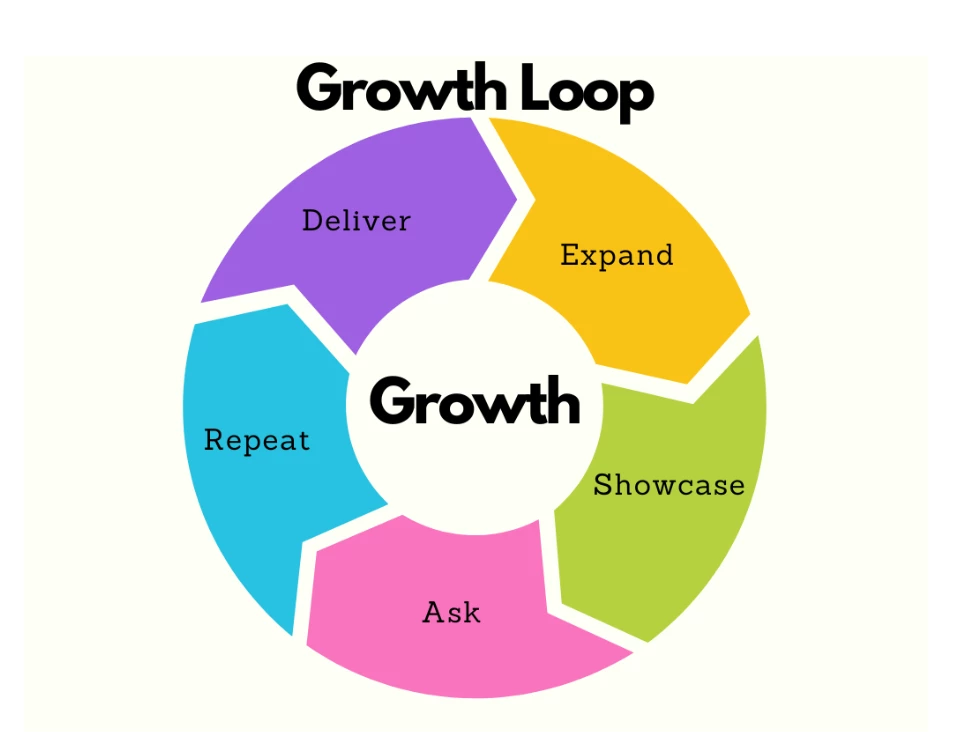
I call it a ‘Growth Loop’.
Deliver → Expand → Showcase → Ask → Repeat
Deliver
This is the foundation.
I made sure to deliver what was expected. On time, every time. I communicated risks and shared test reports promptly. This built credibility and trust.
Your tasks may vary: designing tests, running them, bug advocacy, automation, clear communication (whatever your role demands).
Do it consistently. Deliver what you commit. Communicate clearly. Build trust first.
If you think automation alone will drive your growth, you’re not fully correct . Automation (or any initiative) matters after trust is earned.
Never try to skip this step. Never!
Expand
Once you’ve built trust, it’s time to grow your reach. This does not mean asking for a promotion, but proactively adding value.
Expansion can mean:
- Understanding pain points and fixing them
- Exploring automation opportunities for your process
- Volunteering for code review
- Preparing clear documentation
- Supporting teammates and stakeholders
- Taking up your manager’s tasks.
Here’s how I applied it:
After finishing my tasks, I would approach my manager, not to say “I completed quickly,” but to ask, “How can I help you?”
Once, my manager smiled and showed me a monthly data report he had been compiling for clients. He asked me to try that one.
I started preparing slides for my team’s report. For 2 months straight I did it with very minimal support of the manager. Then from 4th month onwards, I started collecting data from other team leads and creating the full deck.
Nobody asked me. But by making my manager’s life easier, I expanded my influence. That is the key: expansion that scales.
Tip: use a Self-SWOT (Strengths, Weaknesses, Opportunities, Threats) to spot where you can expand.
Showcase
This is where most testers fail.
They deliver. They expand. Then they assume someone will notice.
Reality check: leaders don’t have time to dig through Jira. They do not see your test execution report or how many test cases you have written.
Your impact doesn’t speak for itself, you must communicate it.
Showcasing isn’t bragging; it’s framing your work in business language.
When I automated 120 test cases, I didn’t just say, “I automated 120 tests.”
I said: “By automating the smoke test suite, we reduced testing time by 60%.”
That framing shows impact.
Send a concise monthly impact report and highlight business outcomes (time saved, risk reduced, quality improved)
I suggest you follow the Visibility Flywheel.
If you don’t showcase, you’re replaceable. Period.
Hard work is honorable, but It does not move careers. Your work only counts when it reaches the leadership.
Ask
This is the hardest part. At least for me.
Managers operate under constraints: budgets and limited promotion slots.
I went ahead and asked. It was challenging for me. But still I said:
”My work has impacted the project. We saved time through automation and identified risks early. I’m confident I’m ready for the next role. Can you recommend me for promotion this year?”
I will give another example -here I did not ask for promotion.
I wanted to learn Product Management. I asked to collaborate with the Product Manager and take on some of her tasks. Both my manager and the PM gave me green light.
Go ahead and ask what you need. If you have strong credibility and evidence of your impact, nobody will deny it. There may be delays. But you will get it.
Most managers will not resist. In fact, you make their job easier. Asking is not arrogance. That is how you turn credibility into solid growth.
Repeat
Growth isn’t a one-time event — it’s a loop.
Each time you deliver, expand, showcase, and ask, your scope grows a little more. Over time, those small wins compound and you will see growth.
After two or three loops, you are no longer just a tester. You are the person who owns the testing of a product.
After a few more loops, you are not just “doing testing”, you own the product’s quality. You are supporting your users by solving their problems.
This compounding effect is what I call “Growth Loop”
Not just a growth step. It keeps spinning. The faster you spin it, the faster you become irreplaceable.
Conclusion
Looking back on 20 years in testing, my biggest mistake was waiting.
Waiting for managers to notice me, to hand me opportunities, to write my promotion case.
That waiting cost me years.
Once I accepted that I cannot outsource my career, everything changed.
I built and followed the Growth Loop. And I grew.
Your manager may support you, but they won’t design your future.
That responsibility is yours.
Remember this:
“Do not wait for permission to grow. Build it, show it, ask for it and repeat.”
That is the loop that turns quiet testers into leaders

