

How to negotiate salary in Job interviews
It was my first interview.
I had worked for a company for 7 years. Then I decided to explore opportunities.
I successfully cleared 2 rounds of technical interviews.
The hiring manager appreciated my testing skills. We discussed automation frameworks. I could tell he made the decision to hire me. Great feeling!
The manager asked me to wait in a discussion room.
After a few minutes, the HR executive walked in.
She asked a few questions related to my previous experience. She talked about the current salary package.
Then she asked for an expected package.
I was clueless. I did not think about it. I said ‘As per industry standard’.
She said “yes”. Immediately.
I was very happy. I accepted the offer. Joined the company.
Three months later, I had a discussion over tea with my teammate. Same role, similar experience. His package was way higher than mine.
The difference? He negotiated. I didn't.
That tea tasted bitter.
What's actually happening
Now I have 20 years of experience.
I am a Test Manager. I have been in the interview panels for many years. I have hired dozens of testers.
There is considerable observation.
7 out of 10 candidates just accepted the offer. No questions. No negotiation. Just "Yes, thank you."
You know what? We had budgeted more.
Companies expect negotiation. It's part of the hiring process.
When you don’t negotiate, we wonder if you know your value. This is not just about one job.
Every time you undersell yourself, you set a lower baseline for your next role. That gap compounds. Over the years. Affecting everything. Your salary package will be lower than your juniors’. It hurts. Am I right?
That is the reason I thought I would write about salary negotiation.
Salary is personal.
Offers are contextual. Still, I thought I’d write write about some generic aspects, which might help you to negotiate better.
Do your homework before the interview
Technical preparation for the interview is a must.
Similarly, you need to research the company and the compensation package offered there.
Use your LinkedIn connections. Call your friends. Message people who know the company. Ask recruiters. Check Glassdoor, Payscale, and AmbitionBox. But be specific while asking about the salary range.
A tester who has mastered functional testing isn't the same as SDET who just learned Selenium. Therefore be specific while enquiring the package. Keep the role and responsibilities in mind.
Know your unique strengths.
Write down what you have achieved.
Literally sit down and think:
- How many critical bugs did you catch?
- What process improvement did you make?
- Did you build automation scripts that save time?
- Did you mentor juniors?
- How did you manage risks?
- How did your work help others grow?
Write it down. You will need these stories. HR will appreciate you.
When HR Asks About Expected Salary
HR will ask about current and expected salary, for sure.
They may ask during the initial screening call. Or after the technical interviews. It depends on the company process.
You can't dodge it.
When they ask about your current salary, you can respond like this:
"My current package is X. But I am exploring this role for growth and learning. Not just for an incremental hike”.
When they ask for an expected salary, do not answer immediately. Pause for a few seconds. Don't give a single number.
Instead, you can answer like this: "Based on what I understand so far, and considering my testing depth and automation experience, I think I am better fitted for the position. Can you let me know the range of packages offered here? Happy to discuss specifics if required."
If they push, give a range.
You need data to justify your worth. Mere communication skills may not help you. You need to have evidence and data ready.
I have seen some candidates expecting 30% more than their current package. Sometimes it is OK. But what if you are already underpaid?
Make it realistic but aspirational.
Don't eliminate yourself. But don't lock yourself low before showing your value.
When they want you (the real negotiation)
HR approaches you when you have cleared all technical rounds of the interview.
Usually, every company has an allocated budget for hiring.
HR does try to negotiate with you within the budget. But if the requirement is very urgent, if you are a great fit and if the hiring manager feels that you can get started from day one on the job, they may ask for an additional budget too.
Many factors affect the package decision. But based on your worth, you can ask.
Be logical in the discussion.
Do not treat it as a debate.
You can say this:
"I have researched Test Lead roles requiring my skills, and the market range is clear. I have 10 years of experience. I do mentoring. My presence on LinkedIn, helping juniors in testing could help with hiring. I am looking at the higher end."
You need to make sure the company will benefit by hiring you.
You can say something like this:
"I know your team's dealing with production issues. My strength is uncovering functional bugs which automation misses. In my current company, I implemented the process. That process uncovered bugs early in the cycle. It caught a lot of production bugs."
They may ask about other offers you may have.
Do not lie here.
If you have other offers or are expecting offers, you can communicate like this: "I have 2 offers from other companies. I need to decide soon. But your company is more interesting. If we can align on compensation, I would love to move forward quickly."
Again, do not fake. Do not boast about existing offers and do not try to blackmail. If you have an offer for sure, tell that to HR. Do not lie. It may backfire.
That leads to another factor - how important this job is for you. If you have urgent needs, if you feel this company or job is for you, you may negotiate for a comparatively lesser package. Do not be rigid.
When they say “no” to your expectation
As I said, there will be a limited budget.
And a fixed range of packages. Your expectation may not match the offering.
In that case, HR may say - "This is our final offer."
Now what?
You can negotiate non-salary items.
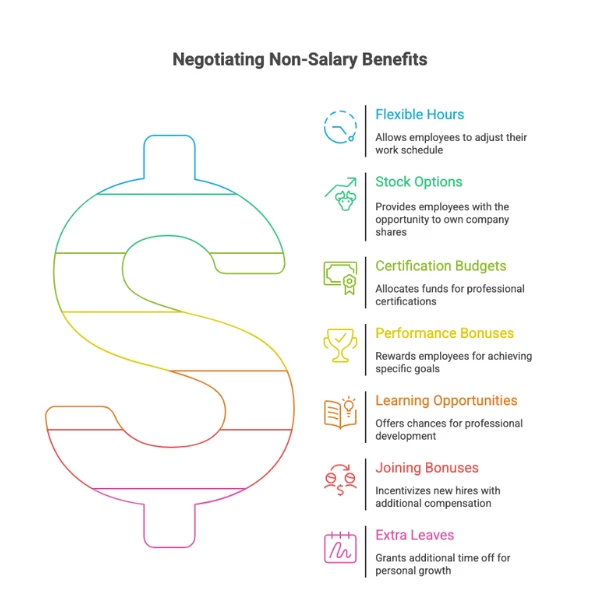
You have many options:
- Flexible hours
- Stock options
- Certification budgets
- Performance bonuses
- Learning opportunities
- Joining bonuses if the base salary is fixed
- Extra leaves for upskilling/conferences
Here is one example from my career:
When I couldn't negotiate the base salary early in my career, I negotiated to work on automation projects. That skill jump? Led to a significant hike in my next role.
If You Are Early in Your Career
If you have 1-5 years of experience, you might be thinking: "This is great for someone with 10 years, but I have no leverage."
Fair. But you can still negotiate.
Focus on learning. Mentorship access. Tool exposure. Certification budgets. Ask to work on challenging projects.
Your leverage is not your past. It is your potential.
Your Action Plan This Week
Before your next interview:
- Message ten friends. Ask about compensation ranges.
- Write down your top 5 achievements.
- Practice your salary script 3 times. In front of the mirror.
- List your non-negotiables vs. nice-to-haves.
- Prepare 3 questions about growth opportunities.
One Last Thing
You have done the hard work.
Whether you are deep in functional testing, building frameworks, or exploring AI for testing, you have invested time in getting good at this.
That investment should pay off fairly.
You need to have a capitalist mindset. You are trading your skills and working hours for the company. They are paying for that. Based on your skills, your contribution and potential, you need to value yourself. You should get fair returns for your investment!!
Companies that recognize your value?
Those are the ones you want. They want you! It's a win-win.
Next time you are in an interview and they ask about salary, pause.
Remember your research. Remember what you bring to the table. Remember negotiation is expected, not rude.
My friend, note this: Somewhere, a hiring manager like me is hoping you will advocate for yourself.
Because we respect people who know their worth.
You are invaluable!!

