
What kind of applications do you think companies are building with the power of AI and how do you think you can test them?

  • July 31, 2025
  • 39 replies
  • 731 views

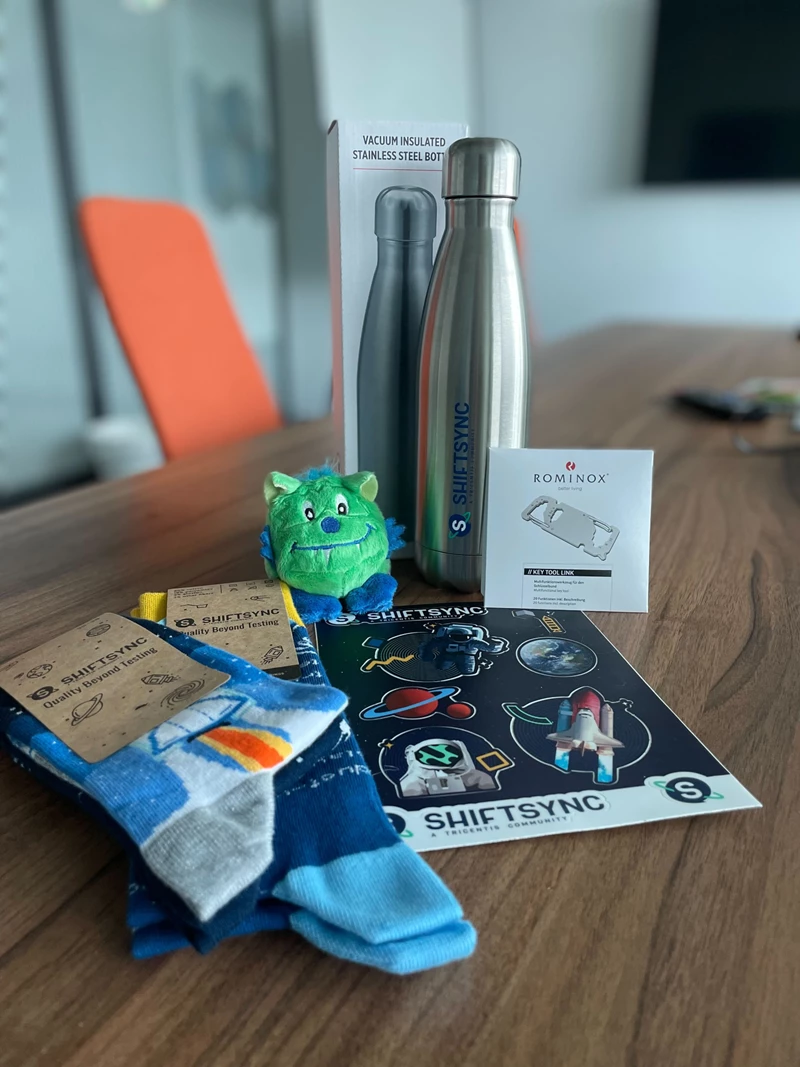
Answer Karthik KK’s Question for a chance to win a ShiftSync Giftbox


39 replies

  • Space Cadet
  • July 31, 2025
  1. Chatbots & Virtual Assistants
  2. Recommendation Systems
  3. Image & Video Recognition Tools

  • Apprentice
  • July 31, 2025

Companies today are building a wide range of AI-powered applications across industries.

Types of AI Applications Companies Are Building

1. Customer Experience & Support

  • Chatbots and virtual assistants (like me!)
  • Sentiment analysis tools
  • Personalized recommendation engines

2. Healthcare

  • AI for medical imaging diagnostics
  • Predictive analytics for patient outcomes
  • Virtual health assistants

3. Finance

  • Fraud detection systems
  • Algorithmic trading platforms
  • Credit scoring models

4. Retail & E-commerce

  • Inventory optimization
  • Dynamic pricing engines
  • Visual search and product tagging

5. Manufacturing & IoT

  • Predictive maintenance
  • Quality inspection using computer vision
  • Supply chain optimization

6. Autonomous Systems

  • Self-driving vehicles
  • Drones and robotics
  • Smart home automation

 How You Can Test AI Applications

Testing AI systems is different from traditional software testing. Here's how you can approach it:

✅ 1. Data Validation

  • Ensure training data is clean, unbiased, and representative.
  • Validate preprocessing steps and feature engineering.

✅ 2. Model Testing

  • Accuracy, precision, recall, F1-score for classification models.
  • RMSE, MAE for regression models.
  • Use cross-validation to check model generalizability.

✅ 3. Functional Testing

  • Verify that the AI behaves as expected in different scenarios.
  • Test edge cases and adversarial inputs.

✅ 4. Performance Testing

  • Measure inference time, scalability, and resource usage.
  • Stress test under high load conditions.

✅ 5. Explainability & Fairness

  • Use tools like SHAP or LIME to interpret model decisions.
  • Check for bias across different user groups.

✅ 6. Integration Testing

  • Ensure the AI component integrates well with other systems (APIs, databases, UI).
  • Validate end-to-end workflows.

✅ 7. Continuous Monitoring

  • Monitor model drift and performance degradation in production.
  • Set up alerts for anomalies or unexpected behavior.

  • Companies are building AI-driven apps like:

    • Chatbots that understand real conversations

    • Fraud detection systems that spot unusual patterns

    • Recommendation engines that feel almost psychic

    • Predictive tools that help in decision-making

  • To test these, I would focus on:

    • Checking how the AI handles real-world edge cases

    • Validating the accuracy and fairness of the model

    • Monitoring performance as data changes over time (data drift)

    • Making sure the AI stays reliable, ethical, and transparent

Because with AI, it’s not just about working—it’s about working right.


  • Space Cadet
  • July 31, 2025

I work for a company that specializes in developing and testing insurance applications. We leverage an AI-based application to generate scenarios and streamline our process by using AI to create test cases, significantly reducing time and effort.


  • Space Cadet
  • July 31, 2025

Writing Test Cases

Writing Automation code

Executing the test case using AI agents

Fixing Bugs 


  • Ensign
  • July 31, 2025

Companies are making mostly RAG based application and AI agents which are aimed to serve role in solving solution of support chat , or getting queries answered from 100s of data documents.

How we can Test it ?
1.We can test it with different testing techniques like below:

Temperature Testing
Zero shot testing
contextmanagement testing
style transfer testing

2.Another way to test it it using LLM as Judge techniques which will draw and five us metrics like :
Contextwithoutreference
contextrecall
Faithfulness
Response relevancy
Factual Correctness
Accuracy metric


  • Space Cadet
  • July 31, 2025

I do not want to put an AI generated answer here, rather would refer typing it entirely.
So, its a simple answer: AI is infused everywhere.
And we internally use AI to test AI, something like an LLM-as-a-Judge with combination of AI agents.


  • Apprentice
  • July 31, 2025

Companies use AI to build apps like chatbots, recommenders, and tools that predict trends or create content.

To test them:

  • A/B testing for real-world performance

  • User testing to assess usability and trust

  • Monitor performance over time


  • Space Cadet
  • July 31, 2025

Chatbots 

NLp

Computer vision 

Recommendation system 

Analysis 


Forum|alt.badge.img
  • Astronaut
  • July 31, 2025

SAP GUI AI Agents: Test mimic functional user role, day to day UAT scenarios..

Requirement → Test Cases → Automation: Test using assertions and Reusability for Automation, LLM as Judge along with human for Manual Test Cases,,,

Translator Languages (Meeting Videos or Text):….


AI driven apps like fraud detection for banking sector , change in dynamic pricing for eCommerce and airline domains , predictive maintenance of equipment in manufacturing sector etc


Testing  AI powered application basically include testing scenarios like

  1. Testing acceptable ranges not the exact matches of search criteria.
  2. Test how robust AI is by manipulated inputs.
  3. Can we prompt or inject developed chatbots.

  • Space Cadet
  • July 31, 2025

Companies are building wide range of applications including;

  1. Chatbots & Virtual Assistants
  2. Predictive Analytics
  3. Video and Image recognition Apps
  4. Systems give recommendations
  5. Autonomous Vehicles 
  6. Healthcare Diagnostic systems

we can do below Testing;

  1. Unit and Integration test
  2. UAT / Performance testing
  3. A/B testing
  4. Functional and Continues testing 

  • Space Cadet
  • July 31, 2025

Answer Karthik KK’s Question for a chance to win a ShiftSync Giftbox



Application types - 

AI-Powered Chatbots & Virtual Assistants

Image and Video recognition

AI assistance

Predective analysis


Type of testing  required - 

Prompt Testing.

Performance testing

Security testing and last one

Regression and functional testing.


  • Ensign
  • July 31, 2025

Companies are using AI to build a wide range of applications that are transforming how businesses operate. Some common examples include:

  1. Customer support tools like chatbots and virtual assistants that handle inquiries or route issues more efficiently.

  2. Predictive analytics platforms in industries like finance, healthcare, and logistics, helping forecast demand, detect risks, or optimize operations.

  3. Recommendation engines used in e-commerce and media to personalize user experiences.

  4. Content generation tools that assist with writing, design, or even code suggestions.

  5. Computer vision systems for tasks like image recognition, surveillance, and quality control in manufacturing.

  6. NLP-driven applications that analyze text, translate languages, summarize documents, or handle voice inputs.

  7. Autonomous and robotics systems, including drones, self-driving vehicles, or smart hardware in logistics and agriculture.

Testing AI-powered applications requires both traditional QA methods and newer approaches tailored to how AI behaves.

  • Functional and regression testing still matter, especially for the surrounding app or user interface.

  • For the AI model itself, you'd need to check how accurate and reliable it is under different scenarios — including unusual or unexpected inputs.

  • It’s important to assess whether the model introduces bias or makes inconsistent decisions, especially in sensitive use cases like hiring or lending.

  • Performance testing also plays a role, especially for real-time systems like chatbots or autonomous machines.

  • For some applications, explainability is crucial — so part of the testing may involve verifying whether the reasoning behind an AI decision is understandable to users.

In short, testing AI involves more than just checking if something works — it’s also about ensuring fairness, robustness, and user trust. My goal would be to approach AI testing with that bigger picture in mind, while still applying a solid QA foundation.


rsimpossible
  • Space Cadet
  • July 31, 2025

Companies are using AI to build smart applications that can think, learn, and make decisions like humans. Here are some common ones:

  1. Chatbots
    Like customer service agents that talk to you on websites or WhatsApp.

  2. Recommendation Engines
    Like how Netflix suggests movies or Amazon shows products you might like.

  3. Voice Assistants
    Like Siri or Alexa that listen to your voice and respond.

  4. Smart Document Tools
    Tools that can read invoices, contracts, or emails and extract important info.

  5. Image & Video Analysis
    Used in security cameras, hospitals (scanning reports), or even to detect quality issues in factories.

  6. Content Creators
    Apps that write content, make images, or even generate code using AI.

  7. Self-Driving or Smart Machines
    Cars that drive themselves or robots that work in warehouses.

Testing AI is a bit different from normal apps because AI learns on its own. Here's how we test them, in simple terms:

  1. Check if the App Works

    • Does the chatbot reply?

    • Does the app load?

    • Do buttons work?
      (This is like normal app testing.)

  2. Check the AI’s Answers

    • Is the chatbot giving the right or helpful answers?

    • Is the recommendation useful or totally off?

  3. Try to Confuse the AI

    • Give tricky questions or odd images to see how it reacts.

    • Like asking “I am not a robot, are you?” to a bot.

  4. Test with Different People

    • Make sure it works fairly for everyone – men, women, kids, old people, different regions/languages.

  5. Speed Test

    • Check how fast the app replies when many people use it at once.

  6. Real-Life Testing

    • Put the app in the real world with actual users and track if it still works well over time.

    • Like watching if a voice assistant understands a noisy room.


  • Space Cadet
  • July 31, 2025

Testing these AI-based applications requires a more dynamic and data-centric approach compared to traditional testing. Since AI systems often behave probabilistically rather than deterministically, testers must go beyond functional testing. It's essential to validate the quality of training data, ensure accurate data preprocessing, and collaborate with data scientists to evaluate model performance using metrics like accuracy, precision, and recall. Bias and fairness testing is also critical, especially in domains like finance and healthcare, to prevent discriminatory behavior in model outputs. Performance testing focuses on how quickly AI models make predictions under load, while explainability testing ensures that AI decisions are understandable and justifiable. Traditional testing tools like Selenium and REST Assured can still be used for UI and API testing, while additional tools like JMeter, MLFlow, and Python libraries (like Pandas or scikit-learn) help in data validation and model testing. Ultimately, testing AI applications involves combining traditional QA practices with data analysis, performance evaluation, and ethical validation to ensure the systems are accurate, reliable, and fair.


Asadmukhtar
  • Space Cadet
  • July 31, 2025

As a lead, I’ve had the opportunity to work with several clients, and one clear trend I’ve noticed is that our entire industry is steadily leaning towards AI. Most companies are now building applications that can think, learn, and adapt—ranging from personalised assistants and AI-powered chatbots to Blockchain AI development and Auto-healing or AI powered Test Automation.

Like Karthik mentioned during the webinar, it's crucial that our fundamentals are solid before starting with the AI testing. It’s no longer just about checking if a button works. We need to evaluate how well the AI learns, adapts, and makes decisions.

That includes validating the input data of LLMs, verifying the predictions, and verifying how the model behaves in different scenarios. AI might work well 95% of the time, but it’s that remaining 5% that can have the biggest impact.


Companies across industries are leveraging AI to build a wide range of applications.

ypes of AI Applications Companies Are Building

  1. Customer Experience & Support

    • Chatbots and virtual assistants (like me!)
    • Sentiment analysis tools
    • Personalized recommendation engines
  2. Healthcare

    • AI-powered diagnostics (e.g., radiology image analysis)
    • Predictive analytics for patient outcomes
    • Drug discovery and genomics
  3. Finance

    • Fraud detection systems
    • Algorithmic trading platforms
    • Credit scoring and risk assessment
  4. Retail & E-commerce

    • Inventory optimization
    • Dynamic pricing engines
    • Visual search and product tagging
  5. Manufacturing & Supply Chain

    • Predictive maintenance
    • Quality control using computer vision
    • Demand forecasting
  6. Human Resources

    • Resume screening and candidate matching
    • Employee sentiment analysis
    • Workforce planning
  7. Media & Entertainment

    • Content recommendation
    • Automated video editing
    • Deepfake detection

How to Test AI Applications

Testing AI applications is different from traditional software testing. Here are key approaches:

1. Data Validation

  • Ensure training data is clean, unbiased, and representative.
  • Test with edge cases and adversarial examples.

2. Model Evaluation

  • Use metrics like accuracy, precision, recall, F1-score, ROC-AUC.
  • Perform cross-validation and A/B testing.

3. Performance Testing

  • Measure inference time, scalability, and resource usage.
  • Test under different loads and environments.

4. Explainability & Fairness

  • Use tools like SHAP or LIME to interpret model decisions.
  • Check for bias across demographics or other sensitive attributes.

5. Security Testing

  • Test for adversarial attacks and data poisoning.
  • Ensure privacy-preserving mechanisms are in place.

6. Integration Testing

  • Validate how the AI model interacts with other system components.
  • Simulate real-world workflows and user interactions.

7. User Acceptance Testing (UAT)

  • Gather feedback from end-users.
  • Ensure the AI meets business goals and user expectations.

  • Space Cadet
  • July 31, 2025

Companies are building insane AI applications that are redefining reality:

  • Pre-Cognitive Personalization: AIs predict desires and craft bespoke realities for individuals.

  • Self-Evolving Economies: Autonomous systems manage global operations with unprecedented efficiency.

  • Genesis Engines for Content: Digital deities create art, music, and entire virtual worlds from mere prompts.

  • Hyper-Adaptive Security Sentinels: AIs pre-empt cyber threats with psychic accuracy and build unbreachable defenses.

  • Augmented Super-Intelligence: AIs become the cognitive bedrock, amplifying human intellect to supernatural levels.

Testing these unhinged innovations requires a radical departure from tradition:

  • Adversarial AI: Other intelligent AIs are deployed to break and confuse the system.

  • Reality Simulation: Digital replicas of systems and societies test AI behavior under extreme conditions.

  • Explainability as a Weapon: "Mind-reading" AI tools dissect decision-making to expose hidden biases and logic.

  • Continuous, Self-Healing Validation: Testing is perpetual; the AI itself identifies flaws and repairs its own code.

  • Ethical "Stress Tests": Probing an AI's "values" and "ethics" in moral dilemmas to prevent unintended consequences.

We're not just testing software; we're probing the very fabric of machine intelligence, in a high-stakes battle for control of our future.


  • Space Cadet
  • July 31, 2025

Popular Types of AI Applications

  • Conversational Interfaces and Chatbots
    Think of chatbots that answer customer questions on websites, digital HR assistants, sales bots, and even tools to help students learn. Well-known examples include ChatGPT and AI-driven support platforms.
  • Image and Video Analysis
    AI can scan images and videos to spot faces, check products for defects on assembly lines, moderate online content, or help doctors read medical images faster.
  • Natural Language Processing (NLP)
    This lets computers understand and work with human language—like translating languages, analyzing customer feedback, moderating online text, or even generating code.
  • Robotic Process Automation (RPA)
    These are digital robots that take over repetitive back-office tasks, such as processing invoices or entering data, freeing up humans for more interesting work.
  • Predictive Analytics
    AI can help predict trends—whether it’s what customers might buy next, spotting possible fraud, or even anticipating medical issues so doctors can intervene early.
  • Personalization and Recommendation Engines
    When you get personalized shopping suggestions or movie picks, that’s AI working behind the scenes. Retailers, streaming platforms, and advertisers all use these techniques.
  • Autonomous Vehicles and Navigation
    Self-driving cars, delivery drones, and smart fleet management systems all use AI to find their way and make decisions safely.
  • Generative AI
    These are the tools that create new stuff—like realistic images, music, code, or even whole stories—from scratch. Examples include Midjourney, DALL-E, and Codex.
  • Healthcare Applications
    AI can help detect diseases, tailor treatments to each patient, accelerate drug discovery, and interpret complex medical scans.
  • Cybersecurity
    It keeps us safe online by detecting threats, preventing fraud, and even responding automatically to certain attacks.

How Do Companies Test Their AI?

Building an AI app is just the first step—making sure it works safely, fairly, and reliably is just as crucial. Companies use a mix of traditional software testing and specialized methods tailored to AI’s unique quirks:

1. Data-centric Testing

  • Ensure the data used to train AI is accurate and unbiased.
  • Carefully prepare training, validation, and test datasets to reflect real-world scenarios and prevent surprises once the system goes live.

2. Model-centric Testing

  • Evaluate if the AI model performs well, is fair, and doesn’t make mistakes in unusual situations.
  • Tests include:
    • Functional Testing: Does the app actually work?
    • Performance & Robustness Testing: Does it work under pressure or with weird data?
    • Explainability Testing: Can you explain why the AI made a certain decision?
    • Metamorphic Testing: Do results stay consistent when inputs change slightly?

3. Deployment-centric Testing

  • Check how the AI behaves in a real-world environment, not just in a lab.
  • This includes:
    • Integration Testing: Does the AI “play nice” with other software?
    • End-to-End Testing: Does the whole system work like it should?
    • Scalability, Latency & Security Testing: Can it handle real user loads without slowing down or breaking?

4. Test Automation & AI-Augmented Testing

  • More testing is automated, often using AI itself to:
    • Generate test cases
    • Decide which tests to run most urgently
    • Fix automated scripts if the app changes
  • Companies track metrics like accuracy, defect rates, and test coverage to keep improving both the AI and the tests themselves.

5. Special Considerations

  • Usability Testing: Critical for AI tools people interact with (like chatbots or voice assistants).
  • Fairness & Bias Testing: Make sure results aren’t unfairly biased against any group.
  • Continuous Monitoring: AI models need real-time monitoring, since changing real-world data (called “data drift”) can make them less accurate over time.

  • Apprentice
  • July 31, 2025

Applications companies build with AI:

  1. Chatbots & Virtual Assistants – for customer support (like ChatGPT).

  2. Recommendation Systems – for shopping, movies, etc. (like Netflix or Amazon).

  3. Fraud Detection – in banking and finance.

  4. Predictive Maintenance – for machines and equipment.

  5. Image & Speech Recognition – in healthcare, security, and phones.

  6. Autonomous Vehicles – like self-driving cars.

  7. Personalized Marketing – targeted ads and emails.

How to test them:

  1. Unit Testing – test small pieces of code.

  2. Data Validation – check input data quality.

  3. Model Accuracy Testing – see how well AI predictions match reality.

  4. Performance Testing – test speed and scalability.

  5. A/B Testing – compare two versions to see which performs better.

  6. Bias & Fairness Testing – ensure results are not unfair or biased.

  7. User Testing – get feedback from real users.


  • Ensign
  • July 31, 2025

Companies are building:

  • Chatbots & virtual assistants
  • Predictive analytics tools
  • Image/document recognition apps
  • Recommendation engines
  • AI-powered test automation

How do we test AI?

  • Data Testing – Ensure clean, balanced, and unbiased training data
  • Model Output Testing – Check for accuracy, edge cases & consistency
  • Fairness Testing – Audit for biased or discriminatory outcomes
  • Explainability – Validate if decisions are transparent & justifiable
  • Model Regression Testing – Detect performance drift after updates
  • E2E Testing – Validate how AI fits into full user workflows
  • Performance Testing – Test AI latency, load handling, and reliability
  • Adversarial Testing – Test how AI handles manipulated or malicious inputs


Testing Ethical Boundaries and Social Biases

AI systems often unintentionally reflect the biases in their training data. Think facial recognition systems performing poorly on darker skin tones or chatbots giving offensive responses.

Out-of-the-box test cases:

  • Enter job titles like “doctor” and “nurse” with different gender indicators. Does the system show biased language or assumptions?

  • Test content moderation AI with sarcasm, emojis, or code-switched text.

  • Create “red teaming” scenarios where you try to trick the AI into violating its own ethical guardrails.

Persona Testing

AI applications like chatbots or recommendation systems can respond differently based on user context or profile.

Test idea:

  • Simulate multiple personas: a 20-year-old gamer, a 50-year-old finance exec, a non-native English speaker.

  • See how the app’s behaviour changes: language, recommendations, or visual elements.

Mutation Testing on Input Data

You “mutate” the input data slightly to see if the AI model changes its decision drastically — a sign of instability or poor generalization.

Example:

  • Modify one word in a sentence: "I am happy today" → "I am very happy today"

  • For image models, slightly blur or crop the image

  • For speech models, simulate background noise

Data Drift & Model Drift Simulations

Over time, AI models become outdated as data changes (e.g., new slang, product names, or seasonal data). This is called drift.

Out-of-the-box testing:

  • Feed the model recent vs. old data and observe output differences.

  • Check if accuracy drops when given data from new regions, markets, or age groups.


Answer Karthik KK’s Question for a chance to win a ShiftSync Giftbox


Companies are using AI for things like:

  • Smart Chatbots/Virtual Assistants: For customer service, like website support or voice assistants.

  • Content Creation: Generating text (articles, emails) or even code.

  • Personalized Recommendations: Suggesting products (Amazon), movies (Netflix), or music (Spotify).

  • Fraud Detection: Spotting unusual financial transactions.

  • Computer Vision: Facial recognition, object detection for self-driving cars or quality control.

  • Predictive Maintenance: Forecasting when machines might break down.

Testing AI apps is tricky because they're not always predictable. You need to:

  • Test the Data: Ensure the data used for training is high quality, unbiased, and covers many scenarios.

  • Test the Model: Check if the AI gives accurate, consistent results, even with slightly wrong inputs (robustness).

  • Test for Bias: Make sure the AI doesn't produce unfair or discriminatory outcomes.

  • Test Explainability: See if you can understand why the AI made a certain decision.

  • Continuous Monitoring: Keep an eye on AI performance in the real world, as it can "drift" over time.


  • Ensign
  • July 31, 2025

As a lead, I’ve had the opportunity to work with several clients, and one clear trend I’ve noticed is that our entire industry is steadily leaning towards AI. Most companies are now building applications that can think, learn, and adapt—ranging from personalised assistants and AI-powered chatbots to Blockchain AI development and Auto-healing or AI powered Test Automation.

Like Karthik mentioned during the webinar, it's crucial that our fundamentals are solid before starting with the AI testing. It’s no longer just about checking if a button works. We need to evaluate how well the AI learns, adapts, and makes decisions.

That includes validating the input data of LLMs, verifying the predictions, and verifying how the model behaves in different scenarios. AI might work well 95% of the time, but it’s that remaining 5% that can have the biggest impact.

Exactly, the 5% matters and needs human intervention, while the 95% needs human validation
